
How Water Recycling Works
Between rising costs, summer restrictions, and the reality of keeping tanks topped up, more households are paying better attention to how much water they use. We all know the standard ways to make your water go further, not leaving the tap running while we brush our teeth, shorter showers, and maybe even collecting your downpipe water for the garden, but water recycling takes those efforts to a new level.
At its simplest, water recycling at home is about making better use of water you’ve already paid for. It’s not about using your bath water for your dishes or anything too outlandish, it’s just recognising that not all water is “used up” after its first job.
Here’s how Kiwi homes are putting it into practice, the easy way.
What water recycling means at home
Household water recycling is about reusing water that’s already passed through your home once. The water has done its job, but with a bit of cleaning up, it can go another round. But let’s go back a step.
Water usually enters your home from one of three places: mains supply, rainwater tanks, or a bore. Once it’s used, it becomes one of two types of ‘wastewater’.
Greywater is what we call the used water from your showers, basins, and laundry. Technically, kitchen water is greywater too, but it needs a bit more filtering than the rest because it contains oils and food scraps. The stuff that can’t be reused, like your toilet waste, is blackwater.
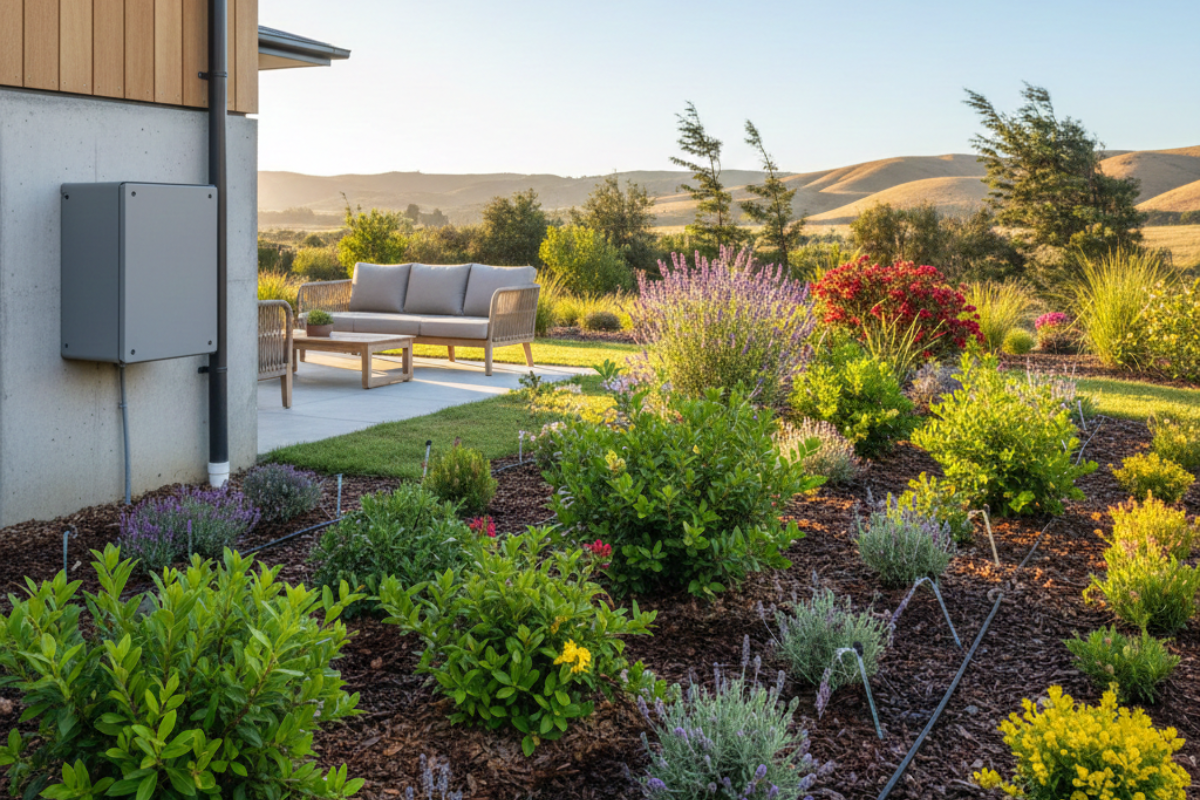
Filtered greywater is great on your lawns, trees, shrubs, and flower gardens. It isn’t drinking-water-clean, so it isn’t suitable for vegetables or fruit trees, or for spraying into the air where people or pets will come into contact with it. But in a drip system on plants you won’t eat, it’s the ideal way to repurpose water you’ve already paid for.
How greywater recycling works
So, how do you pipe greywater into your garden? Well, it needs a bit of a clean-up first.
In a household system, we divert the greywater off before it has a chance to mix with blackwater. From there, it’s filtered to remove things that you don’t want ending up in your soil or clogging your drip system, like lint, hair, and soap residue. What’s left is filtered water that’s ideal for irrigation.
You can reuse greywater manually, but it takes quite a bit of effort to do properly, especially as greywater can’t be stored for more than 12 hours. Instead, greywater recycling systems exist for people who don’t want to think about it every day. This is where systems like WaterMate come in.
Including WaterMate water recycling
WaterMate was designed by the Allflow team to automate everything we’ve described here. It diverts greywater, filters it, and feeds it straight into a drip system in your garden.
With two different sizes available, it suits a wide range of homes, from tiny houses through to larger rural setups, and works across mains, tank, and bore systems. And best of all, maintenance is easy, with accessible, washable filters that just need an occasional blast with the hose.
Customers tell us that the benefits in the first year or two cover their investment. Tank households stretch their supply further. Mains homes spend less on usage. Less water entering your septic system reduces the strain on that system. Gardens cope better through dry spells. And it all happens without you having to lift a finger.
Make every drop count, with WaterMate
Water recycling isn’t just for the most eco-conscious among us, it’s a great choice for any New Zealand home. Whether you’re looking to save a bit of money on your utility bills or take pressure off your off-grid set up, this is an easy place to start.
Learn more about installing a WaterMate or contact us to talk through what might work at your place.